



Workbook: Family Wealth Conversations
Tax filing reports for past events. Tax planning shapes what comes next.
As you prepare your return this year, here are the deadlines, contribution limits, and planning considerations worth knowing now.
Start with the Basics
Tax filing tends to be smoother (and more accurate) when preparation starts before documents are entered into software or sent to a preparer. Reviewing prior-year returns can help identify carryforward credits, changes in income sources, or planning decisions that continue to affect the current filing. Organizing income statements, deduction records, and charitable receipts early also reduces the risk of omissions that can delay processing.
For most taxpayers, the filing deadline is not just a reporting milestone but a planning deadline. Contributions to certain tax-advantaged accounts for the prior year may still be made up until the filing deadline, which can influence both taxable income and long-term savings. The IRS continues to encourage electronic filing and direct deposit to improve accuracy and processing efficiency.
Before filing:
- Gather income documents (W-2s, 1099s, K-1s).
Note: Some 1099 forms may be reissued or corrected after the initial mailing - always reference the latest copy. - Organize records of deductions and charitable gifts
- Review last year’s return for carryforwards or changes
- Consider whether you can still make prior-year IRA or HSA contributions
Deadlines That Matter
Tax deadlines shape more than compliance; they define planning windows. The annual filing deadline establishes when tax liability must be finalized, but it also marks the closing of several opportunities tied to the prior tax year. Missing that window can limit options that are otherwise available.
Throughout the year, estimated payment deadlines help taxpayers reconcile income that is not subject to withholding. These dates are particularly relevant for individuals with variable income sources, investment income, or business earnings. While extensions provide additional time to file, they do not extend the time to pay tax owed, making awareness of timing especially important when managing cash flow and avoiding penalties.
Several dates affect both filing requirements and planning flexibility:
- April 15, 2026:
- Individual tax returns and payments due
- Deadline for 2025 IRA and HSA contributions
- April 15, June 15, September 15, January 15: Estimated tax payment schedule
- October 15, 2026: Extended filing deadline
Planning Tip: If you had to make estimated tax payments or were surprised by a large tax bill, proactive planning may help. By adjusting withholding throughout the year, an advisor can help align payments more closely with what you actually owe, often making tax filing a straightforward experience instead of an unwelcome surprise.
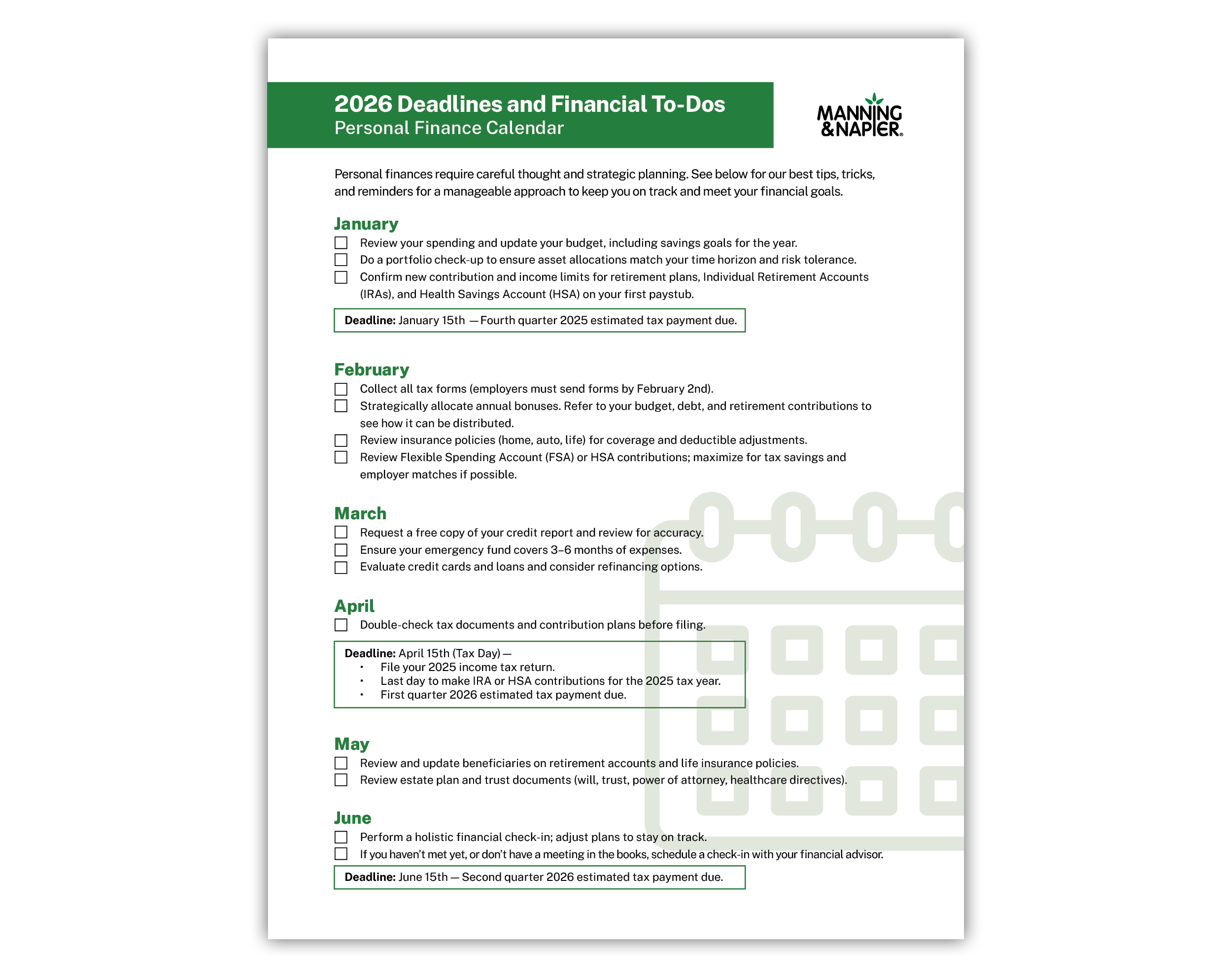
2026 Personal Finance Calendar
Get a month-by-month financial to-do list broken down by the essentials, key deadlines you don't want to miss, and other tips for growing your wealth throughout the year—all in one calendar so you never miss a beat.
Contribution Limits for 2026
Annual contribution limits established by the IRS influence how taxpayers can use retirement and health-related accounts within their broader financial plan. These limits are periodically adjusted and serve as guardrails for tax-advantaged savings. Understanding them helps determine whether available planning capacity has been fully utilized.
Because contributions may reduce taxable income or provide tax-advantaged growth, aligning savings decisions with IRS limits can affect both current-year tax outcomes and long-term planning goals.
Area |
2026 Limits |
|---|---|
|
Social Security COLA |
2.8% |
|
IRA, Roth IRA |
$7,500 |
|
Roth IRA Income Phaseout |
$242,000 - $252,000 |
|
IRA Deduction Phaseout |
$129,000 - $149,000 |
|
401(k), 403(b), 457(b) |
$24,500 |
|
HSA |
$4,400 (self-only) |
|
SEP IRA |
Lesser of $72,000 or 25% of compensation |
|
Individual Estate Tax Exclusion |
$15,000,000 |
|
Annual Gift Tax Exclusion (per recipient) |
$19,000 |
|
Qualified Charitable Distribution |
$111,000 |
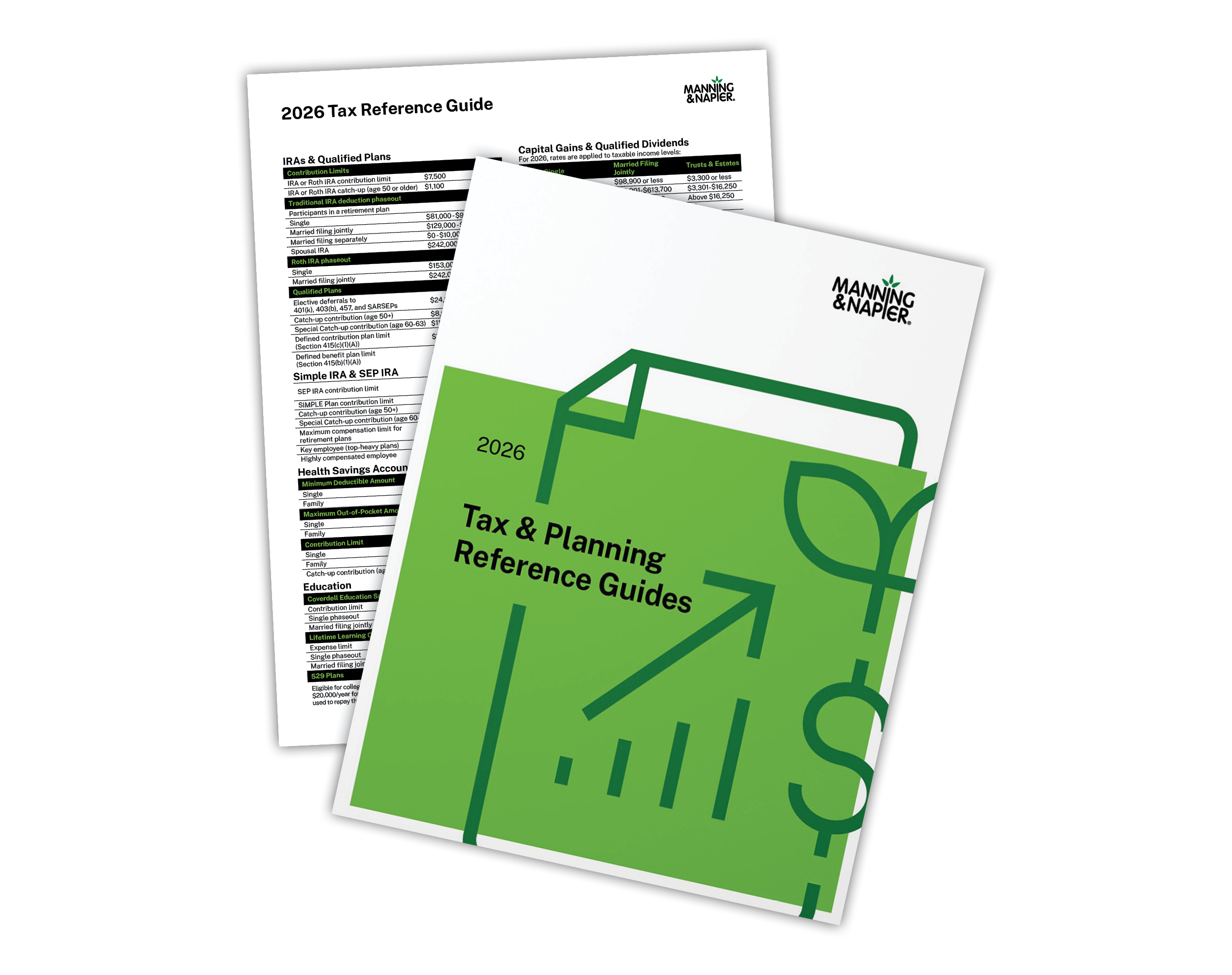
2026 Tax & Planning Guides
Download these quick reference guides for all you need to know about taxes, Social Security, and Medicare for the 2026 tax year in just one place.
A Changing Planning Landscape
Tax planning has become increasingly dependent on how provisions interact rather than on any single rule in isolation. Income thresholds, deduction structures, and temporary provisions can alter outcomes based on timing and coordination
In this environment, decisions about when to recognize income, how to structure charitable giving, or whether to itemize deductions may carry greater planning significance than in prior years.
This evolving framework reinforces the importance of evaluating tax decisions before year-end, when choices remain available. A forward-looking approach allows taxpayers to consider how current actions may interact with future rules and planning opportunities.
From Filing to Planning
Tax season is a checkpoint, not the finish line. When tax considerations are coordinated with broader financial decisions, filing season becomes part of an ongoing planning process rather than a standalone event. A proper tax management plan helps identify areas where adjustments may improve efficiency in future years and keep your wealth working for you.
Please consult with an attorney or a tax or financial advisor regarding your specific legal, tax, estate planning, or financial situation. The information in this article is not intended as legal or tax advice.