



5 Year-End Money Moves
Most exit planning assumes the owner picks the moment: a buyer is found, a successor is ready, and the transition happens on a timeline you control. In reality, roughly half of owner exits aren't voluntary. They're triggered by one of the "5 Ds": death, disability, divorce, distress, or disagreement.1
When an exit is forced, the owner loses the very things that drive a strong outcome: time, negotiating leverage, and a business ready to run without them. The good news is that the protections that matter most are relatively simple to put in place, and they work best when they're set up proactively.
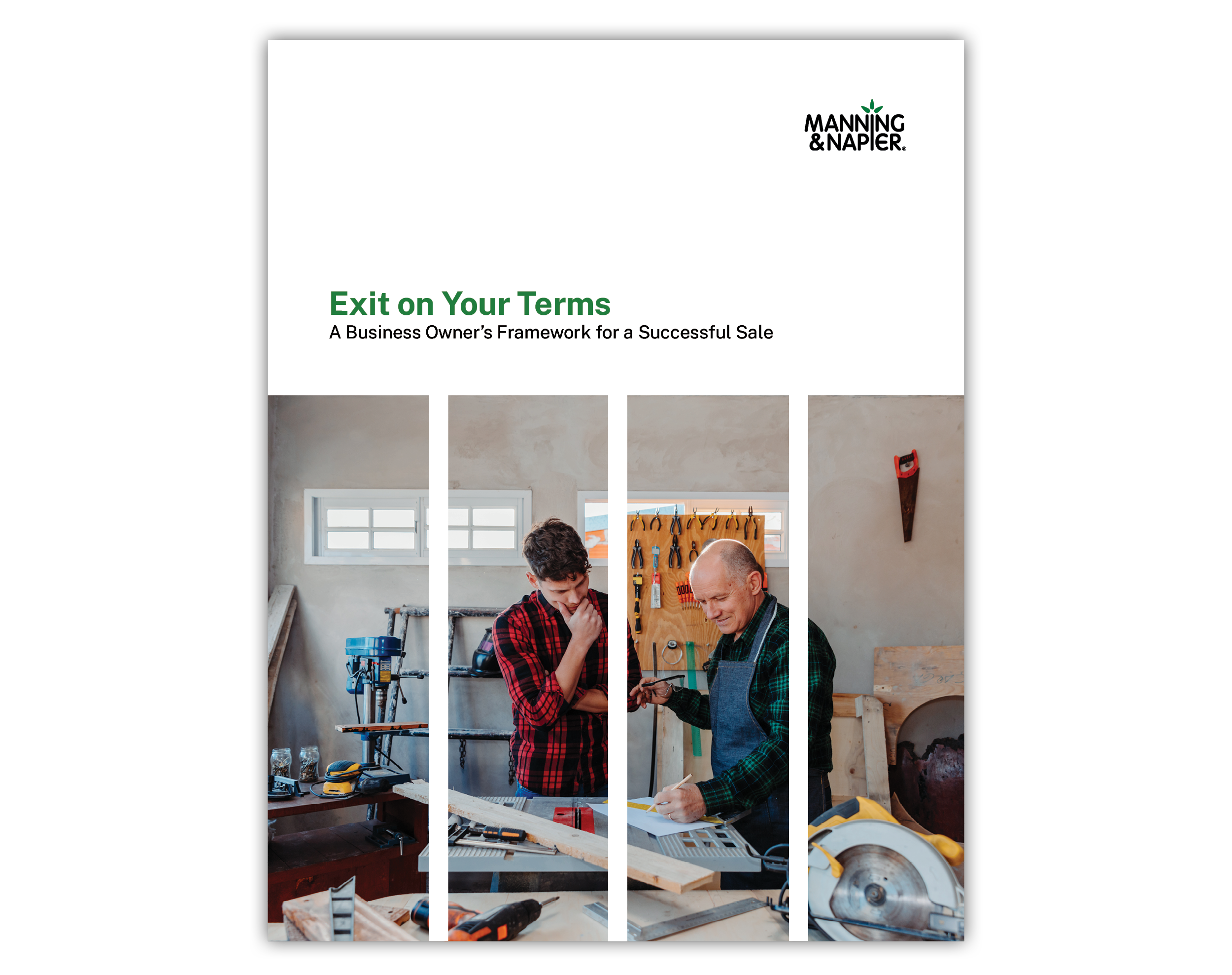
Planning your exit?
Learn more about the importance of planning early and get a copy of our Exit Planning Guide, including our planning checklist, designed to help you navigate the process – and know who should be involved along the way.
Start with a buy-sell agreement that actually works
If you have partners or co-owners, a buy-sell agreement is the foundation of your contingency plan. It spells out who can buy an owner's interest, at what price, and how it will be paid for if an owner dies, becomes disabled, divorces, retires, or wants out.
Many owners have one. Far fewer have reviewed it since it was signed. A few questions worth asking:
- Is the price current? Agreements often rely on a fixed value or an outdated formula. A business that has doubled in value since the agreement was written can leave a family underpaid, or a surviving partner unable to afford the buyout.
- Does it cover every trigger? Death is usually addressed. Disability, divorce, and a partner simply wanting to leave are often vague or missing.
- Is the buyout funded? An agreement that requires a partner to buy out a $5 million interest is only as good as the cash available to do it.
Fund the plan before you need it
The most common way to fund a buyout is life and disability insurance tied to the buy-sell agreement. How the policies are owned matters: in a cross-purchase arrangement each owner holds a policy on the others, while in an entity-redemption arrangement the business owns them. Each structure has different tax and estate implications, so the choice should be made with your CPA and attorney.
Beyond the buy-sell, consider:
- Key person insurance to give the business cash to recruit, retain customers, and stabilize operations if a critical leader is lost.
- Disability buyout and overhead coverage, since a long-term disability is statistically more likely than death during working years and can be harder to plan around.
- Personal liquidity outside the business, so your family isn't forced to sell quickly, at a discount, to cover living expenses or estate taxes.
Make sure someone can run the business on Monday
A contingency plan isn't only legal documents. If you were unavailable tomorrow, would your team know who's in charge, who can sign checks, and how to reach your key customers and lenders?
- Name an interim leader and document their authority.
- Create an emergency operating guide with banking relationships, passwords, key contracts, and vendor contacts.
- Put a durable power of attorney in place that specifically covers your business interests, so someone you trust can act if you're incapacitated.
- Consider retention agreements for key employees, so the people your business depends on have a reason to stay through a transition.
Align your estate plan with your business plan
For owners whose business is their largest asset, an estate plan that doesn't address the business can create real problems: shares passing to heirs who don't want them, a spouse inheriting a minority stake with no control, or an estate without the liquidity to settle its obligations.
Review how your ownership is titled, whether a trust should hold your shares, and whether your will and buy-sell agreement say the same thing. Conflicts between documents are common, and they're easiest to fix before they're tested.
Revisit the plan as life changes
A contingency plan isn't a one-time project. Marriages, new partners, a jump in valuation, a new generation joining the business: each can quietly make an old plan obsolete. A good rule of thumb is to review your buy-sell agreement, insurance coverage, and estate documents every two to three years, and after any major business or family event.
Bring the right team together
Protecting against an unplanned exit touches your business, your family, and your financial plan at once. That typically means coordinating:
- Your financial advisor, to measure how much protection your family needs and keep every piece aligned with your long-term financial plan.
- Your corporate attorney, to draft or update the buy-sell agreement and governance documents.
- Your estate attorney, to align wills, trusts, and powers of attorney with your business ownership.
- Your CPA, to evaluate the tax treatment of insurance structures and buyout terms.
- An insurance professional, to design and price coverage that matches the agreement.
- A valuation professional, to set or update the price the agreement relies on.
The bottom line
You can't choose every circumstance of your exit, but you can choose how prepared you are. Owners who protect their families and their business value put a current, funded buy-sell agreement in place, plan for the business to run without them, and keep their estate plan in step with their business.
Public Sources: 1 Share of involuntary exits and the "5 Ds" — Exit Planning Institute, "Planning for the Unexpected Exit," citing EPI's State of Owner Readiness research
Please consult with an attorney or a tax or financial advisor regarding your specific legal, tax, estate planning, or financial situation. The information in this article is not intended as legal or tax advice.