



The Psychology of Giving: Five Behavioral Finance Insights Every Non-Profit Should Know
Legacy giving is often associated with the ultra-high-net-worth, but the truth is that it includes a far broader group of individuals. In reality, people from a wide range of financial backgrounds choose to leave a charitable legacy. They’re not just motivated by wealth, they’re driven by values, relationships, and long‑term impact.
A closer look at a few key statistics reveals just how expansive and influential the legacy giving landscape truly is, and how it presents a meaningful opportunity for individuals and organizations alike.
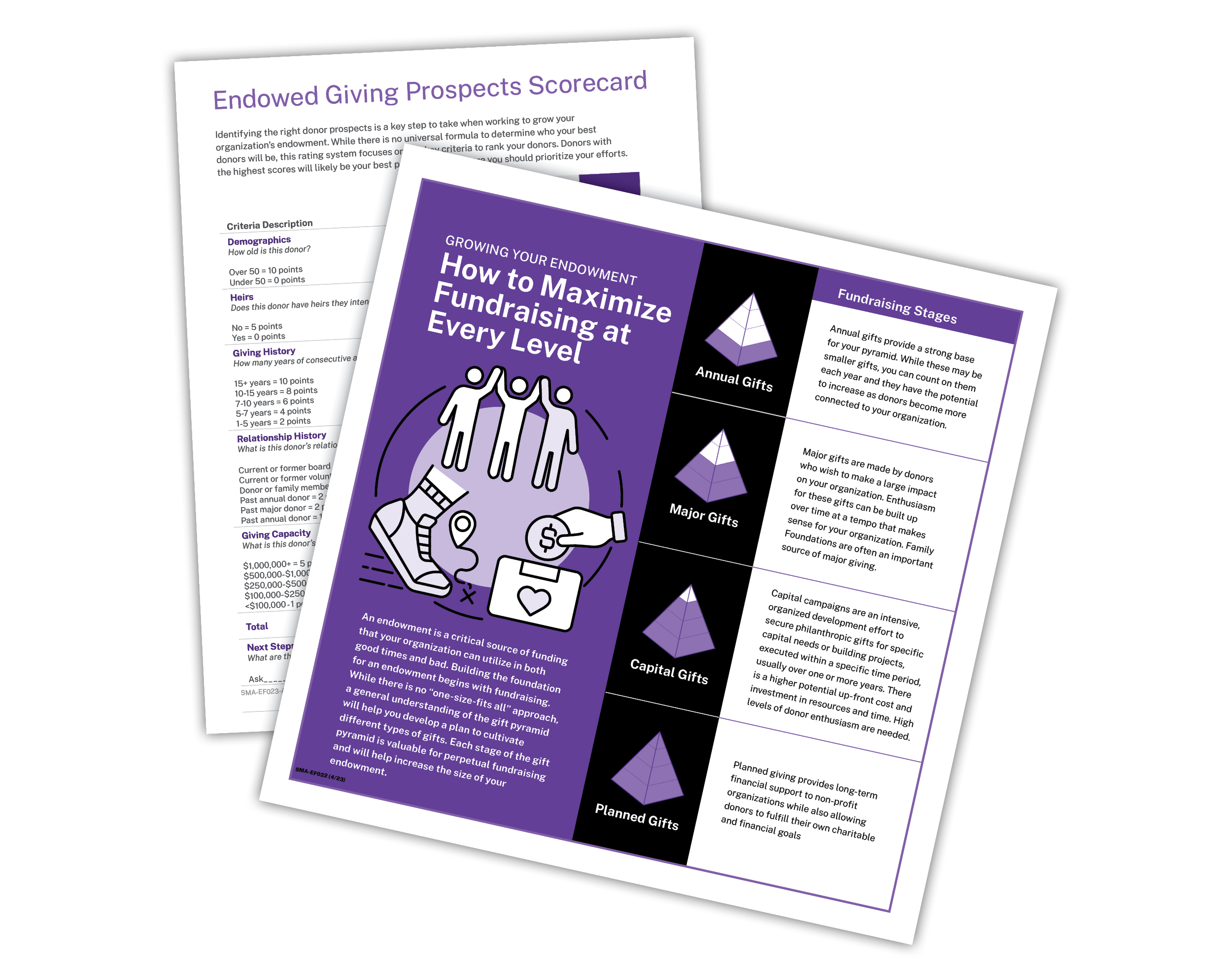
Your roadmap to growing your endowment
If you’re looking for ways to effectively grow your organization’s endowment, our toolkit can help you get there! Featuring multiple donor outreach templates, an endowed giving prospect scorecard, infographics, and more, this toolkit is filled with actionable resources to help enhance your fundraising.
1. The Average Household Net Worth in America is $1,240,000
At first glance, this number may seem unexpectedly high. However, it reflects the long‑term accumulation of assets such as home equity, retirement accounts, and investments that many households have built over time. While much of this wealth is not immediately liquid, it represents a powerful opportunity for charitable impact. For many donors, legacy and estate gifts are a practical way to translate these accumulated assets into lasting support for causes they care deeply about.
2. The Average Annual Salary in the US is $70,000
Income and wealth tell two very different stories. While annual income may limit someone’s ability to make large outright gifts, legacy giving allows donors to shift the focus from annual income to lifetime accumulation. By leveraging the assets they’ve built over time, individuals have the opportunity to make significant charitable contributions that may far exceed what feels possible during their working years. This strategy opens the door for more donors to make significant gifts than organizations often anticipate.
3. 401(k) Retirement Accounts remain an efficient vehicle for charitable bequests
Defined contribution plans like 401(k)s are still a relatively recent development, but they’ve become a foundation of personal wealth in America. For many individuals, these tax-deferred accounts represent a significant portion of their assets, making them one of the most efficient and impactful vehicles for charitable bequests.
Since 401(k)s have been available for more than four decades, most Americans approaching retirement, and many still in their working years, have likely contributed to one for most of their careers. As a result, these accounts are increasingly central to estate planning and legacy giving conversations.
4. By 2034, There Will Be More Adults Over 65 Than Children Under 18
This demographic shift represents a profound change in the population. As more people have fewer or no children, many are able to accumulate and retain more wealth than previous generations. At the same time, a growing share of the population is entering retirement, making estate planning and legacy considerations more top‑of‑mind than ever. For non-profits, this represents a critical window to engage donors in meaningful conversations about long‑term impact, values, and the legacy they hope to leave behind.
5. By the End of 2024, $326 Billion Were Held in Donor-Advised Funds
Donor-advised funds (DAFs) have grown rapidly by offering donors a flexible and tax-efficient way to support the causes they care about. However, a significant portion of these assets remains underutilized in long‑term charitable planning. Thoughtfully integrating DAFs into legacy strategies, whether through succession planning or final distributions, can uncover significant charitable potential and help ensure these funds create lasting impact over time.
The Bigger Picture
Altogether, these statistics tell a powerful story. Wealth is more widespread than it may appear, and the tools to give meaningfully are more accessible than ever before. Legacy giving helps bridge the gap between intention and impact by allowing individuals to support the causes they care about in ways that align with their financial reality, not just their annual income.
For organizations, the opportunity is clear. By helping donors recognize how their accumulated assets can drive generosity, legacy giving becomes more than a planned financial decision, it becomes a natural extension of a life shaped by values, purpose, and lasting impact.
The information in this paper is not intended as legal or tax advice. Consult with an attorney or a tax or financial advisor regarding your specific legal, tax, estate planning, or financial situation.
.jpg?width=500&height=500&name=young-professional-female-presenting-during-a-meeting%20(1).jpg)